
section heading hidden

Also Popular
Our Latest News


16 Sep 2026
Laying a Gravel Path That Lasts for Years
Article
- Home
- Blog
- By Small Patio Ideas for Relaxing Outdoor Spaces
- Comments 35
- 26 Nov 2026
The Real Difference Between Skill, Luck, and Discipline in iGaming
You’ve seen the ads. A guy in a tuxedo hits a jackpot on a slot machine, a poker pro stares down a bluff, and a football bettor cashes a seven-leg parlay. It all looks glamorous and easy. The reality is messier. The gap between the marketing fantasy and the actual experience is vast, and it’s costing casual players real money. This article isn’t here to sell you a dream. It’s here to explain how the iGaming ecosystem genuinely works—from the mathematics of a slot spin to the psychological war at a poker table—so you can navigate it with your eyes open.
The Mathematics of the Machine: Why Slots Are Not a Battle of Wits
Let’s start with the slot machine. It is the undisputed king of the casino floor, both online and off. But most players misunderstand what they are playing. When you pull the virtual lever, you are not engaging in a strategy game. You are buying a lottery ticket with a predetermined return-to-player (RTP) percentage. That number—usually between 94% and 96%—is calculated over millions of spins. It does not mean you will get 96% of your money back in a session. You could lose everything or triple your bankroll in ten minutes.
Modern video slots use random number generators (RNGs) that produce thousands of outcomes per second. The symbols you see on the reels are just a visual representation of a number that was chosen the instant you pressed spin. This is crucial to understand: there is no memory, no hot streak, and no machine due for a payout. A slot that hasn’t paid out in hours is not closer to a win than one that just paid. Each spin is an independent event.
That said, not all slots are created equal. A key concrete detail is the difference between low-volatility and high-volatility slots. Low-volatility games like Starburst pay small amounts frequently, stretching your bankroll. High-volatility slots like Bonanza Megaways or San Quentin can go hundreds of spins without a meaningful win, then hit a massive multiplier. Knowing which type you’re playing changes your session strategy entirely. If you have a $50 budget, high-volatility slots will eat it in minutes. If you want a longer session, stick to lower volatility and smaller bets. If you want to dig deeper, FAFA828 is a useful place to start.
- Concrete tip: Look for the RTP in the game’s help menu. A 96.5% RTP slot is mathematically better than a 94% one, but variance still rules the short term.
- Concrete tip: Never chase a bonus round you think is “due.” The RNG doesn’t know you exist.
- Concrete tip: Set a loss limit before you spin. The average slot player loses 2-4% of total wagered per hour, but that can accelerate fast with max bets.
Poker: Where Skill Actually Tips the Scale
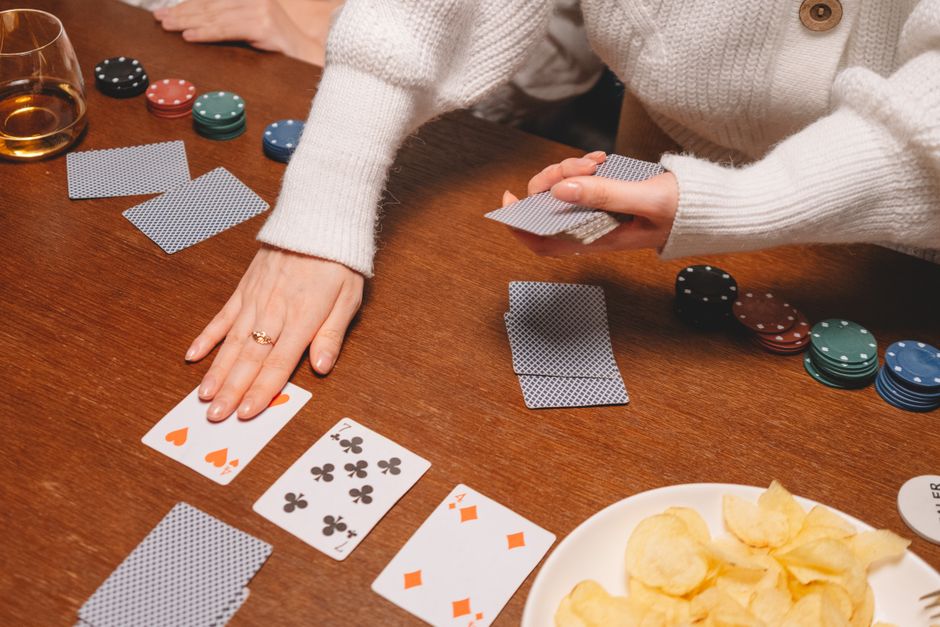
If slots are pure chance, poker is the opposite. It’s a game of incomplete information, psychology, and mathematical expectation. Over a single session, luck dominates. Over 100,000 hands, skill wins. This is why professional poker players exist but professional slot players do not. The house edge in poker comes from the rake—the commission the casino takes from each pot—not from the game itself. In a Texas Hold’em cash game, that rake might be 5% up to $5. That means you’re not just beating your opponents; you’re beating the rake.
Here’s where humans writing about iGaming often get vague. Let’s get specific. A solid pre-flop strategy in No-Limit Hold’em involves playing tight-aggressive. You fold the bottom 70-80% of hands from early position, raise with premium hands like Aces, Kings, Queens, and AK. The edge comes from exploiting opponents who play too many hands. If you sit at a table where four players see every flop, your strategy should shift to value betting big hands and never bluffing. If you sit at a table of nits who fold constantly, you can profit by raising wide.
The mental game is just as important. Tilt—the emotional spiral after a bad beat—is the bankroll killer. A player who loses a $200 pot to a two-outer on the river and then immediately goes all-in with 7-2 offsuit is not unlucky; they are undisciplined. The best poker players in the world have mediocre win rates. A 5 big blinds per 100 hands win rate is considered excellent at mid-stakes. That means grinding out small edges over thousands of hands while managing your emotions.
Sports Betting: The Illusion of Knowledge
Sports betting feels like it should be skill-based. You watch football, you know the teams, you follow the injuries. But the bookmaker knows all that and more. The odds are set to balance the money on both sides and guarantee the house a profit—the vigorish or “vig.” A standard -110 line means you must win 52.4% of your bets just to break even. That is a razor-thin margin.
Where recreational bettors go wrong is parlays. A five-team parlay at standard odds pays roughly 25-to-1. It feels like a lottery ticket with better odds. But the true odds of hitting five 50/50 propositions is 3.1%—or 32-to-1. The bookmaker’s edge on a parlay is enormous. Smart bettors focus on single bets, line shopping (comparing odds across multiple sportsbooks to find the best price), and exploiting promotional bonuses. For example, a “risk-free” first bet up to $1,000 is not actually risk-free; you typically get a site credit if you lose, not cash back, and that credit often has rollover requirements.
- Line shopping example: If Book A has the Chiefs at -3.5 (-110) and Book B has them at -3.5 (-105), betting $100 at -105 saves you $5 in potential loss and wins you $5 more. Over 500 bets, that’s $2,500.
- Bankroll rule: Never bet more than 1-2% of your total bankroll on a single game. A $1,000 bankroll means $10 to $20 per bet. This survives losing streaks.
The Hidden Edge: Bonuses, Rakeback, and VIP Programs
The biggest open secret in iGaming is that the smartest players don’t just play well—they extract value from the platform itself. Online casinos and poker rooms compete fiercely for your action. They offer reload bonuses, free spins, rakeback deals, and VIP tiers that return a percentage of your losses or wagered amount. For a high-volume player, these perks can turn a losing proposition into a break-even or slight winner.
But read the fine print. A 100% deposit bonus with a 40x wagering requirement on slots means you must bet $4,000 to clear a $100 bonus. If the game has a 96% RTP, the expected loss on that $4,000 is $160. You are effectively paying $60 for a $100 bonus. That’s not a good deal. However, a 10% rakeback deal at a poker room is pure profit on top of your winnings—it’s a direct reduction of the rake you paid. Always calculate the expected value (EV) of a bonus before claiming it.
Discipline Over Dopamine: The Only Lasting Strategy
Every iGaming vertical—slots, poker, betting, blackjack—shares one common enemy: the human brain. Dopamine hits from near-misses on slots, the thrill of a bluff getting through, the rush of a last-second touchdown cover. Casinos and betting apps are engineered to keep you playing. Flashing lights, celebratory sounds, auto-play features. They are not designed for your benefit.
So here is the uncomfortable truth. If you cannot treat iGaming as entertainment—with a fixed budget you are willing to lose—you should not play. The house edge is real. The variance is brutal. The only players who consistently win are those who treat it like a business: tracking results, managing bankrolls, exploiting bonuses, and walking away when the session is done. For everyone else, it’s a paid hobby. Treat it that way, and you’ll enjoy it far more. Chase losses, and it will eat you alive.
Share:

Seasonal Jobs to Keep Your Garden Tidy
Winter pruning keeps apple trees productive and healthy by removing dead wood and opening the centre for light.
5 Comments
-

Robert Sonny says Jul 21, 2024 at 10:00am
I must explain to you how all this mistaken idea of denouncing pleasure and praising pain was born and I will give you a complete account of the system
Reply-

John Abraham says Jul 21, 2024 at 10:00am
I must explain to you how all this mistaken idea of denouncing pleasure and praising pain was born and I will give you a complete account of the system
Reply-

Robert Sonnysays Jul 21, 2024 at 10:00am
I must explain to you how all this mistaken idea of denouncing pleasure and praising pain was born and I will give you a complete account of the system
Reply
-
-
-
Robert Sonny says Jul 21, 2024 at 10:00am
I must explain to you how all this mistaken idea of denouncing pleasure and praising pain was born and I will give you a complete account of the system
Reply
Leave a reply

Trending Topics
Popular Post
4 Sep 2026
Building a Simple Raised Bed for Vegetables
30 Aug 2026
Autumn Garden Checklist for a Strong Spring

28 Aug 2026
Sharpening and Caring for Garden Hand Tools


How We Can
Help You!
Mix hardy perennials and native wildflowers to build a colourful border that supports pollinators through the seasons.
Contact Us
There are many variations of passages of Real stories, useful guides and the occasional recommendation, all in one calm corner of the web.
Important Link
Recent Post
-
Creating a Wildlife Pond in a Small Garden
24 Aug 2026 -
Using Evergreens to Add Structure All Year
18 Aug 2026
Newsletter
Many desktop publi’s shing packages web page editors now is use sites.
Copyright © 2026 Aspen & Company. All rights reserved.Aspen & Company.