
section heading hidden

Also Popular
Our Latest News


16 Sep 2026
Laying a Gravel Path That Lasts for Years
Article
- Home
- Blog
- By Small Patio Ideas for Relaxing Outdoor Spaces
- Comments 35
- 28 Nov 2026
Slots, Poker, and the Real Math Behind iGaming
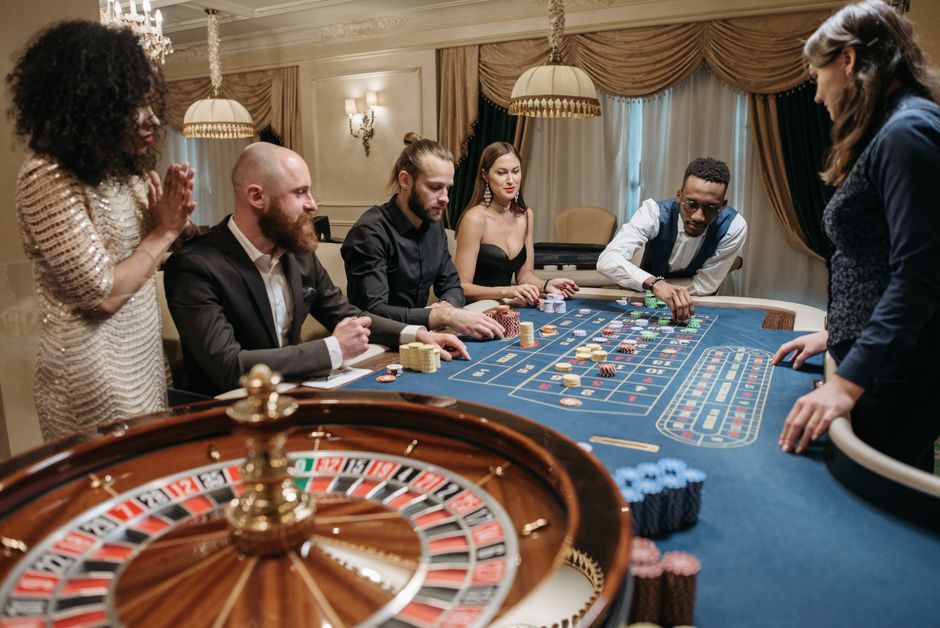
Most people who open a casino app for the first time assume the games are basically random. They're not. Every slot spin, every blackjack hand, every poker pot sits on top of a carefully engineered mathematical model, and understanding even a rough sketch of that model changes how you play. Not in a "beat the house" fantasy way, but in a "stop making expensive mistakes" way. That distinction matters more than any hot streak story you'll read on a forum.
Why the House Edge Is the Only Number That Actually Matters
Ask ten casual players what makes a game "good" and you'll get ten answers about graphics, bonus rounds, or how often the machine paid last Tuesday. Ask a professional and you'll get one answer: the house edge. That's the mathematical advantage the operator holds on every bet, expressed as a percentage of your total wagered amount over the long run.
The spread between games is enormous. A blackjack table with favorable rules and near-perfect basic strategy sits around 0.5% house edge. European roulette is 2.7%, and its American cousin doubles that to 5.26% because of the extra double-zero pocket. A typical three-reel slot? Anywhere from 2% to 15% depending on where you are in the world. Video poker variants like Jacks or Better, played correctly, can dip below 0.5% on a full-pay machine. That's a bigger gap than most players realize, and it compounds brutally over hundreds of sessions.
Here's the mental trick that helps: the house edge is rent you pay for the entertainment. A 5% edge on a $100 bankroll means you can expect to lose about $5 per full cycle, on average. The question isn't whether you'll lose over thousands of hands. You will. The question is how much fun you're extracting per dollar of expected loss.
Slots: Volatility Is Not the Same as House Edge
This is where most beginners get confused. Slots are described using two separate numbers: RTP (return to player) and volatility. RTP is the inverse of house edge. A slot with 96% RTP gives back 96 cents per dollar wagered over millions of spins; the operator keeps 4 cents. Volatility describes how those returns arrive.
- Low volatility: frequent small wins, slower bankroll swings. Think classic three-reel bars-and-sevens games.
- Medium volatility: balanced hit frequency and payout size. Most modern five-reel video slots live here.
- High volatility: long dry spells punctuated by huge multi-hundred-x wins. Book of Dead, Money Train, and most Megaways titles.
Two slots can share a 96% RTP and play completely differently. A high-volatility game effectively demands a much larger bankroll because the variance is wider. If you sit at a 96% RTP, 10,000x-max-win slot with $50 and expect to hit the bonus, you're probably going to bust long before the math has any chance to average out. Match your bankroll to the volatility, not just the RTP.
One more thing: online slots almost always have higher RTPs than land-based machines in the same market. US casino floors routinely run 85% to 92% RTP. Licensed online slots usually sit between 94% and 97%. The same theoretical game can be a meaningfully better deal online, which is worth remembering if you're deciding where to play.
Poker Is the Only Game Where You Can Have a Real Edge
Here's the uncomfortable truth for anyone who loves slots and table games: with rare exceptions, you cannot be a long-term winner against the house in games of pure chance. Poker is different. In poker you're playing against other players, and the operator just takes a rake. That means a skilled player can win consistently if the edge exceeds the rake. For a closer look, 88CLB has helpful details.
What separates winning poker players from losing ones isn't luck. It's a handful of skills that compound: Readers looking for specifics may like 88CLB COM.
- Position awareness. Acting last gives you more information and more control. Underrating position is the single most common leak in low-stakes games.
- Pot odds and implied odds. Knowing when a call is mathematically justified and when it's just wishful thinking.
- Range thinking. Not "what does he have?" but "what's the entire distribution of hands he could have here?"
- Bankroll management. Cash game rules of thumb suggest 20 to 40 buy-ins for your stake; tournaments want 50 to 100 buy-ins minimum.
- Emotional control. Tilt destroys more bankrolls than bad beats do.
None of this is glamorous. But every winning player you've ever read about built their roll on these five pillars, not on a sixth sense about river cards.
Betting Markets: Where Information Beats Instinct
Sports betting has exploded in the past decade, and the noise has drowned out a lot of useful signals. The most important one: the closing line is the sharpest number you'll ever see. Bookmakers adjust odds right up to kickoff based on where the money is going, and the closing line reflects all available public and private information. If you consistently beat the closing line, you're doing something right. If you can't beat it over hundreds of bets, you don't have an edge no matter how confident you feel.
Practical implications for a recreational bettor:
- Line shopping matters. A half-point difference on a spread is often the margin between profit and loss over a season.
- Vigging eats you alive. Standard -110 pricing implies about a 4.5% hold per side. You need to win roughly 52.4% of your bets just to break even.
- Promos and boosted odds are real value. Sign-up bonuses, free bets, and profit boosts shift the math in your favor for specific bets, and disciplined bettors farm these relentlessly.
- Avoid parlays unless you have a reason. They're fun, but the vig compounds with every leg.
Bankroll, Session Length, and the Discipline Nobody Wants to Hear About
Bankroll management is unsexy and probably the most valuable thing in this entire article. The math is straightforward: set a monthly entertainment budget you can comfortably lose, split it into session chunks, and treat each chunk as spent the moment it leaves your wallet. If you deposit $200 and play $1 spins on a medium-volatility slot, you're giving yourself roughly 200 base-game spins, or somewhere in the neighborhood of an hour at typical spin speeds. That's a bedtime, not a tragedy.
Session length amplifies variance in ugly ways. Short sessions are dominated by swings; the house edge barely gets to work. Long sessions let the mathematical reality take over. That cuts both ways: a lucky player can cash out big in 20 minutes, but a patient one will, over hours, drift reliably toward their expected loss. There's no trick around this. There's only honest budgeting and honest expectations.
What Actually Separates a Good iGaming Experience
After enough time around tables, slots, and betting apps, a pattern emerges. The people who genuinely enjoy this hobby aren't chasing jackpots or a mystical hot streak. They've accepted two things: the house has an edge they can't beat at most games, and that's fine, because they're buying entertainment with money they've already written off. They pick games with reasonable RTPs, understand volatility, play poker when they want a genuine skill challenge, and shop lines when they bet sports.
The industry will keep innovating. Crash games, provably fair crypto casinos, live dealer studios with 4K streams, and AI-driven bonus mechanics are all reshuffling the landscape in real time. None of that changes the underlying arithmetic. RTP is still RTP, edges are still edges, and the only sure way to lose more than you can afford is to forget that and treat the math like a suggestion. Learn the numbers, respect them, and the games get a lot more fun.
Share:

Seasonal Jobs to Keep Your Garden Tidy
Winter pruning keeps apple trees productive and healthy by removing dead wood and opening the centre for light.
5 Comments
-

Robert Sonny says Jul 21, 2024 at 10:00am
I must explain to you how all this mistaken idea of denouncing pleasure and praising pain was born and I will give you a complete account of the system
Reply-

John Abraham says Jul 21, 2024 at 10:00am
I must explain to you how all this mistaken idea of denouncing pleasure and praising pain was born and I will give you a complete account of the system
Reply-

Robert Sonnysays Jul 21, 2024 at 10:00am
I must explain to you how all this mistaken idea of denouncing pleasure and praising pain was born and I will give you a complete account of the system
Reply
-
-
-
Robert Sonny says Jul 21, 2024 at 10:00am
I must explain to you how all this mistaken idea of denouncing pleasure and praising pain was born and I will give you a complete account of the system
Reply
Leave a reply

Trending Topics
Popular Post
4 Sep 2026
Building a Simple Raised Bed for Vegetables
30 Aug 2026
Autumn Garden Checklist for a Strong Spring

28 Aug 2026
Sharpening and Caring for Garden Hand Tools


How We Can
Help You!
Mix hardy perennials and native wildflowers to build a colourful border that supports pollinators through the seasons.
Contact Us
There are many variations of passages of Real stories, useful guides and the occasional recommendation, all in one calm corner of the web.
Important Link
Recent Post
-
Creating a Wildlife Pond in a Small Garden
24 Aug 2026 -
Using Evergreens to Add Structure All Year
18 Aug 2026
Newsletter
Many desktop publi’s shing packages web page editors now is use sites.
Copyright © 2026 Aspen & Company. All rights reserved.Aspen & Company.